

How to Create the Perfect Charcuterie Board
Based on our Instagram feed, it’s officially always charcuterie season! The beautifully presented boards are ubiquitous during picnic season and around the holidays because they’re great for entertaining and can be scaled for large or small gatherings. Not to mention, charcuterie boards are easy to put together and look pretty darn impressive!
What’s Charcuterie, Anyway?
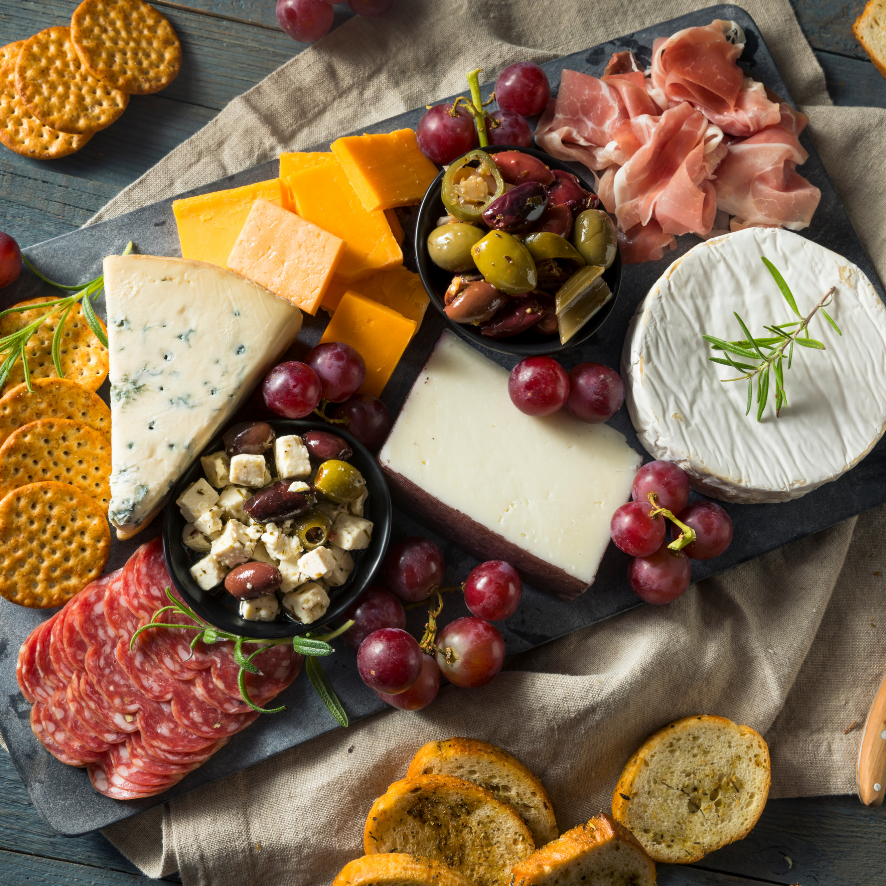
Charcuterie is a French term referring to an assortment of cooked or cured cold meats, primarily pork. Generally, it includes cheese, cured meats, crackers or bread, fruit or vegetables, and varying accompaniments arranged on a board for easy pairing and munching. The best boards have a large variety of textures, flavors, and layers.
If you’re wondering how you can create the perfect charcuterie board, keep on reading for our eight tips!
8 Tips for Creating a Beautiful Charcuterie Board
1. Have a good variety of meat and cheese
Depending on the number of people, it’s good to have three to seven cheeses and three to seven types of meat. Make sure your cheeses are a range of hard to soft and mild to bold flavors. Creating a board with lots of contrasting flavors and textures will make it more interesting.
2. Add jams or preserves
Sometimes the perfect accompaniment is a little sweetness! Sharper cheeses are brought out by a small dollop of fig jam or strawberry preserves. Pepper jellies are great too for some added spice. This is a great opportunity to show off homemade jams and jellies, too!
3. Stack it
Provide a few types of crackers with subtle flavors. Water crackers or wheat crackers flavored with herbs or pepper are great additions (and are the perfect vehicle to get all the paired goodness to your mouth!). You can also try grilled slices of baguette!
4. Fresh or dried fruit and veggies
Like the jams and preserves, fresh and dried fruit add some sweetness, but also texture and interest to your board. You can also do sweeter vegetables like strips of bell pepper or carrot sticks. Make sure that whatever you add is easy to grab and eat, such as small fruits like blueberries, grapes, or dried apricots. Crunchy vegetables like radishes are excellent too. If you want to use a seasonal fruit like pears or apples, make sure to slice them for easy nibbling.
5. All the spreads
Hummus, tapenades, grainy mustards, and other spreads can add layers of flavor and color while helping your meat and cheese stick to your cracker. Just make sure you put a small spoon in each bowl of spread!
6. Get creative
If it's easy to eat, don't hesitate to try it on your board. Nuts, mini pickles, other pickled vegetables (try including your own homemade quick pickles!), olives, chocolate, honey...the options are endless!
7. Assembling your board
Grab small bowls for your dips and spreads, and begin by placing the largest items first (such as a wheel of brie or brie en croute) then arrange everything else around the big items. Place items with different textures, different colors, and different sizes next to each other to create visual interest. Roll meats into tubes, or fold in half and fan out, or fold a few rounds of salami in half and then roll them to create rosettes. Slice cheese (some in cubes, some in sticks, some in wedges) or break into crumbles (unless it's a soft cheese, then provide a cheese knife or spoon) for easy grabbing.
8. Add seasonal touches
Fill in blank areas with herbs and garnishes. These are also a great way to add a seasonal look to your board. For example, in winter you could use sprigs of rosemary and thyme, pomegranate seeds and fresh cranberries, or dried citrus wheels. In summer, leaves of fresh basil, blueberries, strawberries or figs can add a breezy summer feel. Autumnal boards could be dressed up with sage leaves, mini pumpkins or pumpkin seeds, while a spring charcuterie might feature delicate fennel fronds, strategically placed arugula leaves, or gorgeous spring radishes cut into roses or simply sliced to show off their vibrant hue. Let your imagination (and the seasons!) guide you.